The O’BRAIN Lab has access to a range of methodological devices:
Our lab employs a diverse array of cutting-edge methodologies to investigate the neural and behavioral mechanisms underlying obesity and decision making. We combine experimental, computational, and brain-based methods to capture the complexity of brain–behavior relationships. Below is a short overview of the main methods used across research projects in the O’BRAIN Lab.
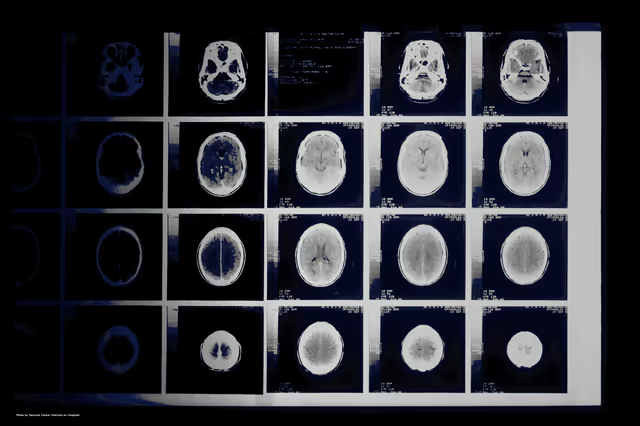
With the help of Magnetic Resonance Imaging (MRI), we take our behavioral research one step further and explore neural correlates of obesity-related behavioral differences. All MRI-techniques use strong but harmless magnetic fields to image the human brain and identify structural alterations or specific brain regions that are engaged during a task.

Our studies combine data from validated questionnaires with other behavioral, anthropometric, and physiological measures from our participants. With these questionnaires we look into personality traits, eating behavior or assess dietary patterns.
Eye tracking uses projection patterns and optical sensors to gather data about the position and movement of eye and gaze direction. This data can inform us for example about an individual's attention or center of focus.
The brain operates by discharging very small electrical impulses, sending information from one brain area to the other. Electroencephalography (EEG) picks up on these electrical activations in a millisecond resolution and in this way can record brain activity relevant to a certain task in a very precise temporal manner. In order to record the signal, participants will be asked to put on a fabric cap which has a number of (32 up to 128) microdisk electrodes attached to it. Because hair usually prohibits the electrodes from being directly in contact with the surface of the head, a tiny bit of wet gel is applied to each electrode individually in order to build a 'bridge' between the surface of the head and the electrode.
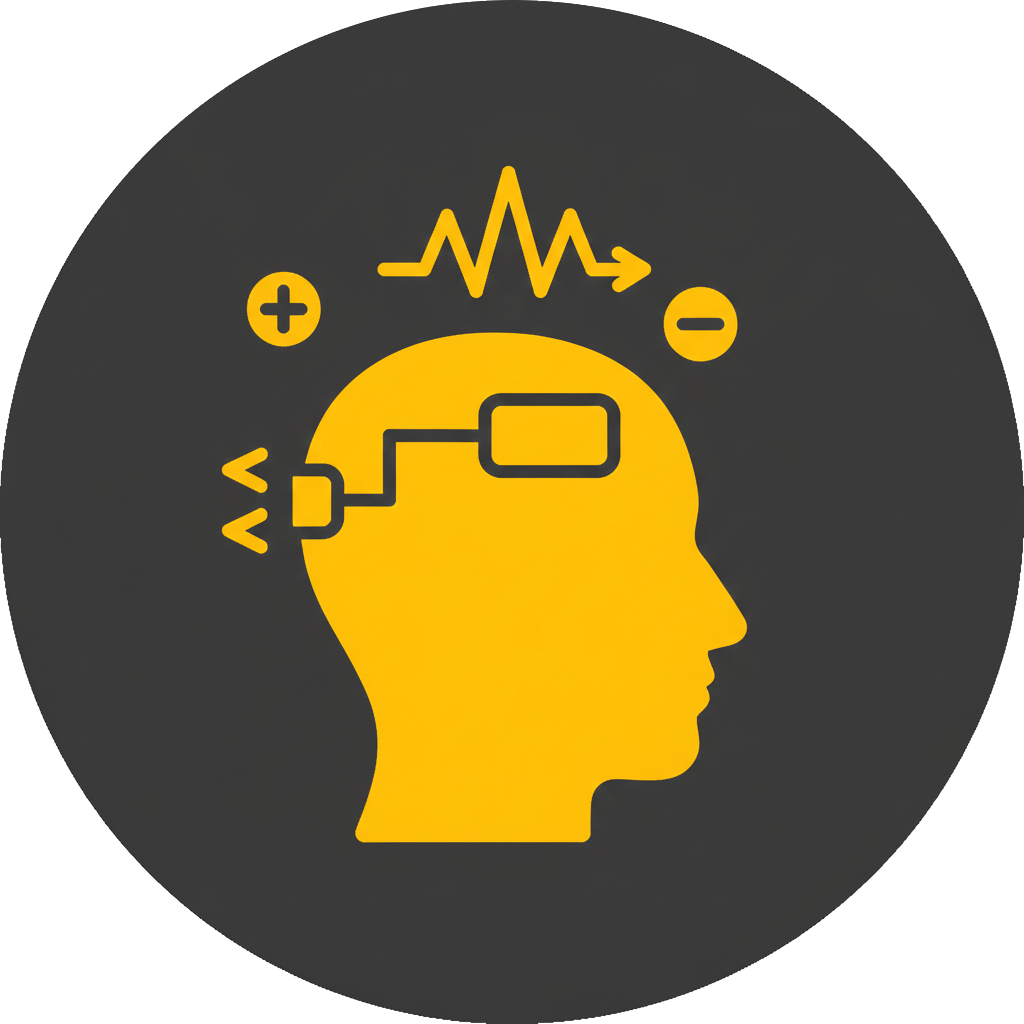
Transcranial Direct Current Stimulation (tDCS) is a non-invasive method that allows us to gently influence brain activity using very weak electrical stimulation applied to the scalp. The stimulation is delivered through small, soft electrodes that are placed on specific areas of the head and held in place with straps or a cap. tDCS can be applied at rest or during task performance and is generally well tolerated, with only mild sensations such as tingling or warmth occasionally reported at the beginning of the session. By temporarily altering activity in selected brain regions, tDCS helps us better understand how the brain contributes to behavior.
We develop and apply mathematical and computational models to explain and predict behaviour and neural dynamics. Methods include mechanistic dynamical systems, reinforcement-learning and Bayesian models, and biophysically informed models that bridge neural signals with behaviour. Models are fit to empirical data using principled parameter estimation, cross-validation, and model-comparison techniques; they allow hypothesis testing, individual-difference analysis, and generation of quantitative predictions for experiments and interventions. Our modelling work is implemented with open tools (Python, MATLAB, R) and is regularly combined with neuroimaging and behavioural datasets to provide mechanistic insights and improve experimental design.